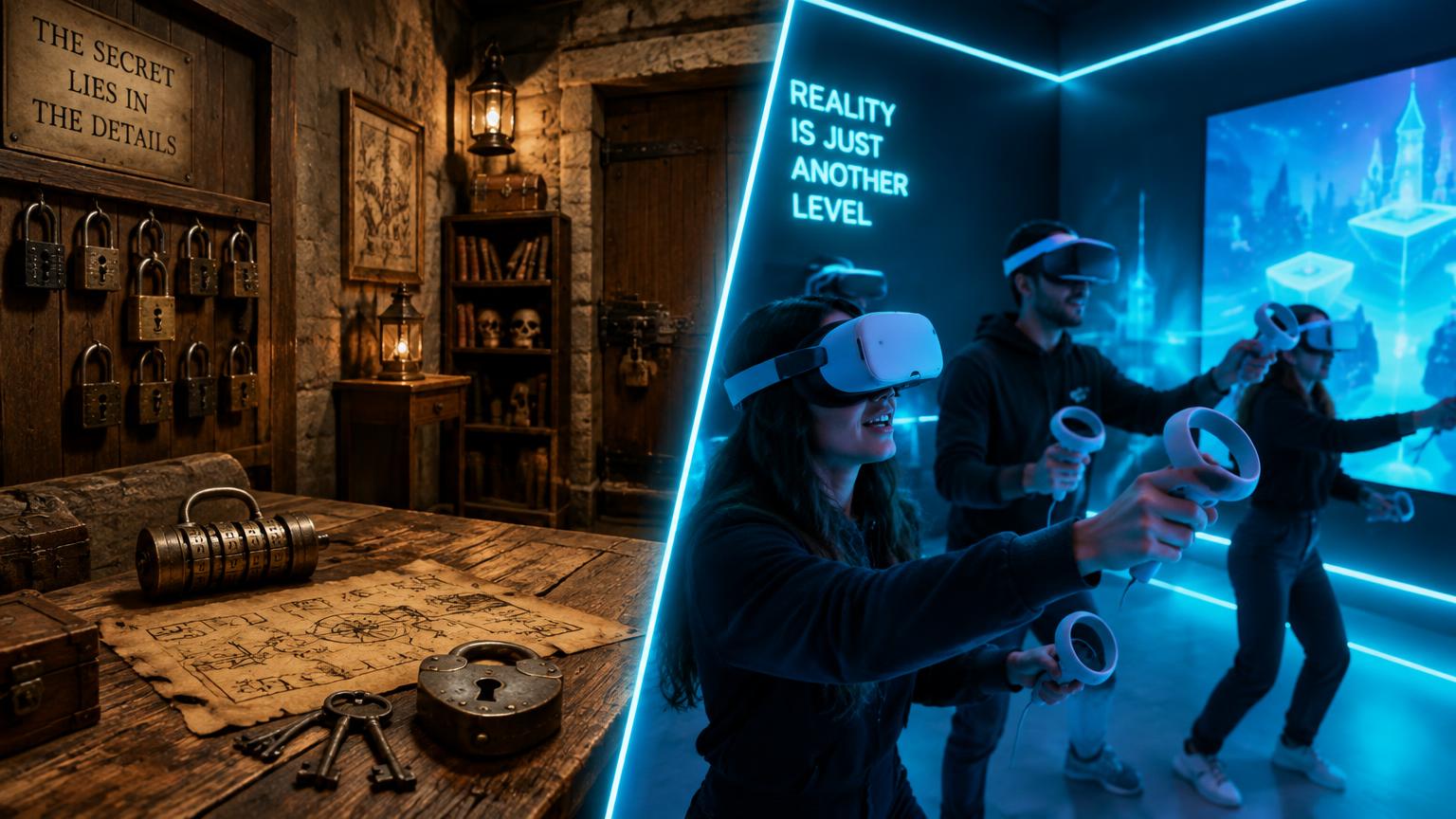
VR or escape room in Budapest? An honest comparison
Both are popular group programmes, but they are NOT the same. A detailed comparison: when the classic escape room wins, and when VR does.
If you search for a group programme in Budapest, two names keep coming up: escape room and VR. On the surface both are “go out with colleagues and solve something”, but the actual experience is quite different. This article walks through, honestly, what each is good for.
Quick comparison
- Duration – Escape room: 60 minutes fixed. VR: 60–180 minutes, flexible.
- Group size – Escape room: 2–6 per room. VR: 2–20+ with rotation.
- Type of experience – Escape room: logic puzzles. VR: physical, immersive, many genres.
- Replay value – Escape room: once per room. VR: 20+ games you can switch between.
- Typical price (Budapest, per person/hour) – Escape room: HUF 4–6,000. VR: HUF 4–7,000.
- Booking – Escape room: 1–2 days with a fixed start. VR: more flexible slots.
When should you pick an escape room?
- A fixed team of 3–5 who like logic puzzles.
- You want a true “one hour, phones off” kind of focus.
- Story and atmosphere matter (zombie room, murder mystery, sci-fi).
- None of you has done an escape room yet — the first one is always a story.
When should you pick VR?
- The group is larger (8+) — an escape room then needs 2–3 rooms, which is a logistics nightmare.
- The group is mixed (calm or physical types, IT or sales), because VR has many game types to choose from.
- You want flexible time (2 or 3 hours instead of 90 minutes).
- You will come back — 20+ games to switch between; an escape room is a one-shot per theme.
- You need something competitive and funny at once (a Beat Saber tournament >>> a trust fall).
Concrete situations
Corporate team building for 15+
VR. An escape room would need 3–4 rooms in parallel, which in Budapest is almost impossible at the same venue. In VR the same team rotates through mixed formats in two hours.
A date for two
Both work. An escape room is more intimate (just the two of you); VR is funnier and an easier conversation starter afterwards.
Teen birthday (ages 13–17)
VR. Teens specifically come for this — and the content is easier to post on TikTok.
Classic friend group (4–6 people, cinema-night energy)
Escape room. That is exactly the group size it is built for, and the one-hour format is complete.
Bottom line
Escape rooms and VR are not enemies — they complement each other. A small, fixed team gets the one-hour puzzle; a larger, mixed or returning group gets flexible VR. If you are planning a group programme in Budapest, it is worth trying both once, then deciding which you book more often.
Ready to go?
Book a VR slot online in District XI — takes minutes, or browse by occasion.
More articles
 Beat Saber: Become a Rhythm Game Master at PartyVR Budapest StudioGet ready for the most popular rhythm game in virtual reality! Our detailed guide shows you how to master light sabers using PartyVR Budapest's Quest 3 headsets.
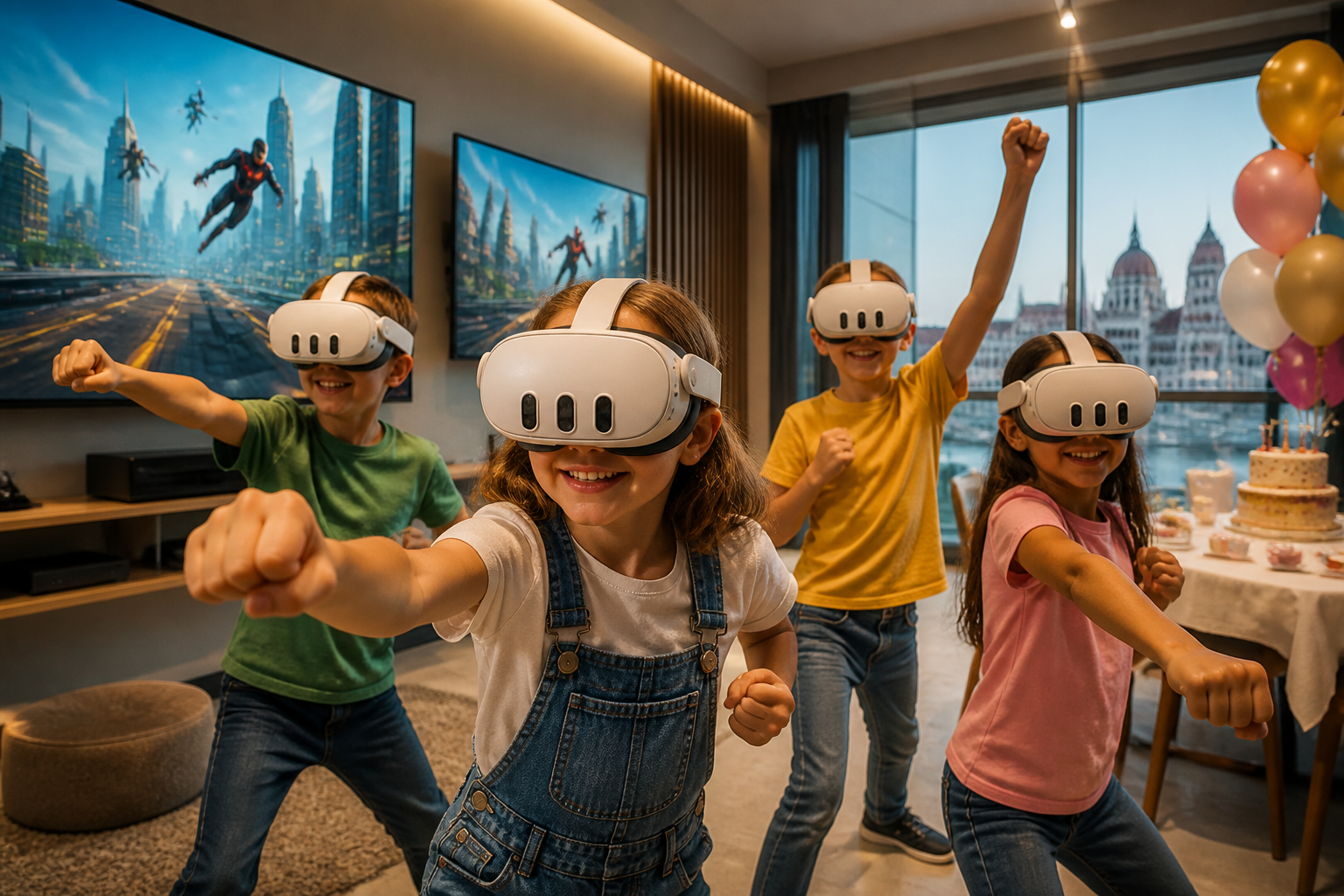 Superhero Birthday in the Heart of Budapest: How to Turn Your Kid's Party into an Unforgettable Quest 3 VR AdventureDiscover how your child can become a real-life superhero for a day with cutting-edge Quest 3 VR technology. A family atmosphere, exciting games, and unforgettable memories await you.
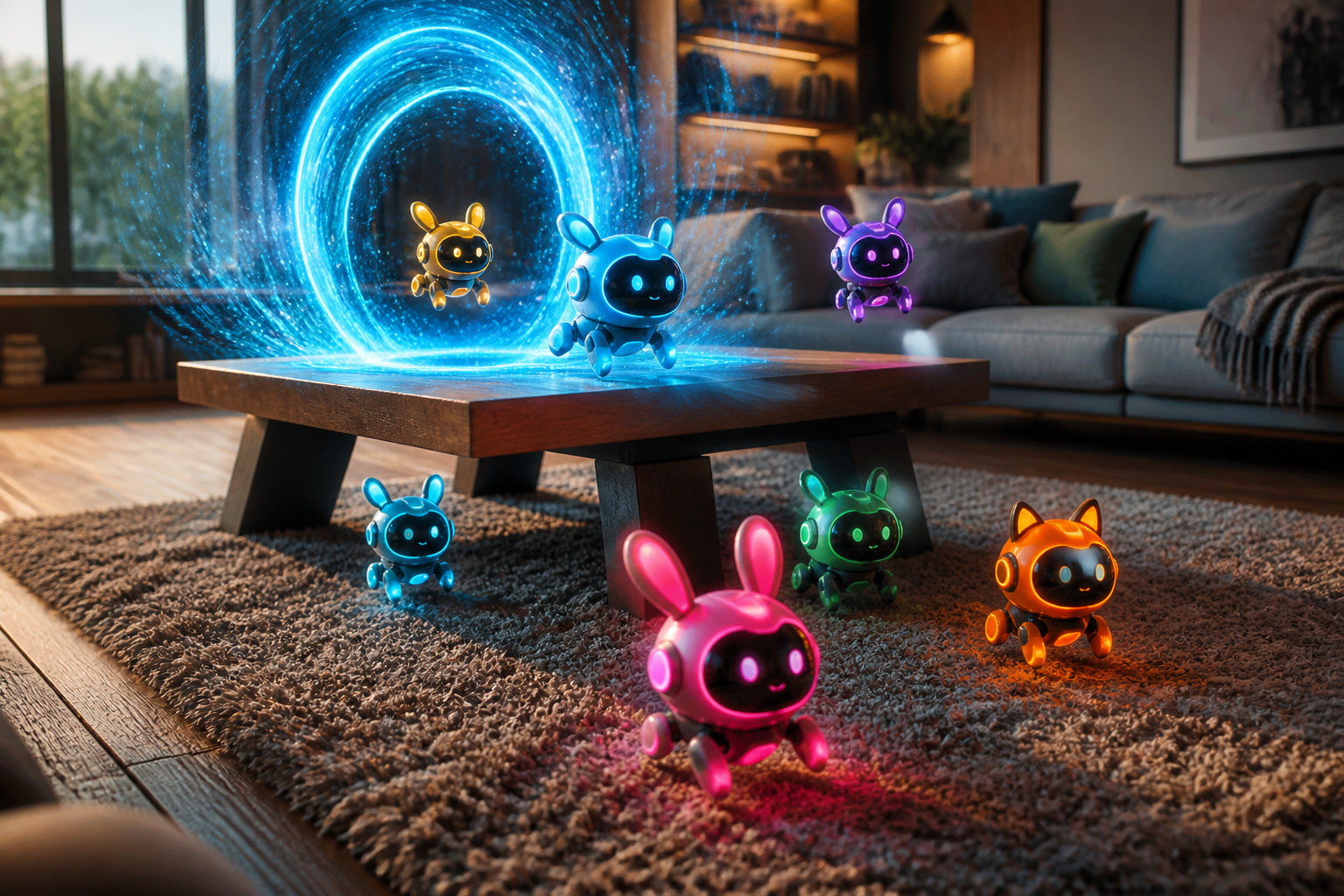 How Does Quest 3's Latest Technology Blur Reality with Gaming?Discover how Meta Quest 3 transforms your living room into a battlefield or a magic kingdom using mixed reality, while keeping the outside world in sight.