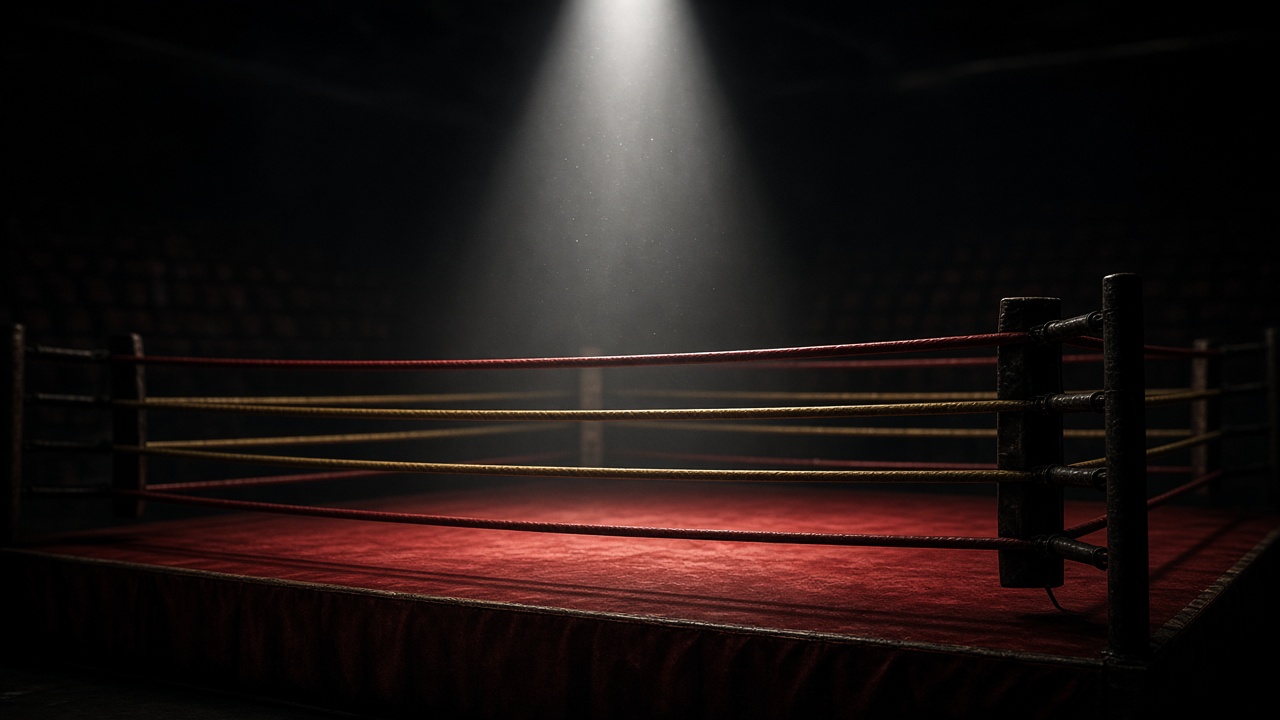
Boxing as a sport: why it lasts, where it stands, who to watch
The ring is hard. Boxing is still one of the most elegant sports of movement. Hungarian and international names, 2026 results — and a more comfortable, still active round in Újbuda.
It is easy to leave boxing for the big cards: a blue and red corner, a late stream, then an argument about the score. The sport itself is older and simpler than that. Two people, rules, rounds, and a body that does not lie. No pass, no substitution. That is why boxing lasts: discipline, pulse, character. Not because it is always beautiful. Because when it is done well, it is.
Why boxing – not only because of the big cards
Anyone who has walked into a gym for real knows: boxing training is not “learning to punch”. Feet, breath, eyes, patient repetition. Sparring is only the top. Under it: shadowboxing, the bag, the skip rope, the round timer you cannot skip. That is why many coaches recommend it even to people who will never take a fight: the sport asks for focus and fitness at the same time. And winning here is rarely noise. More often it is quiet and work.
- Fitness: three minutes a round – your pulse does not ask if you were on the sofa yesterday.
- Coordination: a punch only lands if the feet are there too. Boxing trains the brain, not only the arms.
- Character: you can lose, and the next day you still have to walk back into the same gym.
- Community: a good gym is not an arena. A coach, a sparring partner, the person by the bag counting the round.
Hungarian boxers: from László Papp to Luca Hámori
In Hungary boxing has a memory, even if everyday news still puts football first. László Papp brought home three Olympic golds – a world-class mark in this sport. István “Kokó” Kovács is an Olympic and world champion, and today the federation president. Zsolt Erdei held a WBO belt as a pro. This is not nostalgia. It is the standard you can still measure today’s field against – and a reason to watch the ring, not only the goals.
- László Papp – three-time Olympic champion, the baseline of Hungarian boxing.
- István “Kokó” Kovács – Olympic and amateur world champion, now president of the Hungarian Boxing Federation.
- Zsolt Erdei – professional world champion, WBO belt at light heavyweight.
- Luca Hámori – Paris Olympics, 5th place; back in competition in 2026 after a camp in the United States.
- Pylyp Akilov – world-championship bronze, one of the Hungarian elite’s international marks.
- Richárd Kovács – Paris Olympics, 5th place (63.5 kg); in 2026 he closed his amateur career and is turning pro.
In March 2026 Richárd Kovács did not enter the 70th István Bocskai memorial tournament. The federation spoke of retirement; he said the conditions were not realistic near thirty, with a family and a job, and that he would continue among the professionals. That is Hungarian boxing now as well: an Olympic points-scorer, injury, an argument about the national team – and the question of whether there is a pro path at home. On 21 September Budapest hosts world-championship trials and the Budapest championships. The sport does not live on television. It lives where the bag sounds.
The international field: Usyk, Fury, and what slipped in 2026
The heavyweight division has orbited Oleksandr Usyk since 2024. He beat Tyson Fury twice on points – Fury’s only professional losses. In May 2026 Usyk stepped in against Rico Verhoeven. Fury came back this year: wins over Arslanbek Makhmudov and Mariusz Wach, then the big British superfight with Anthony Joshua fell apart this week. Fury publicly asked for an Usyk trilogy in November. Usyk’s camp will not be a backup plan. That is heavyweight boxing now: the biggest names are there, the biggest fights often are not.
- Oleksandr Usyk – the heavyweight standard, two wins over Fury, still hunting one last big round in 2026.
- Tyson Fury – a 2026 return, Joshua talks over, an Usyk-trilogy ask that the other side declined.
- Anthony Joshua – the British superfight slipped again; the heavyweight calendar has another hole.
- Women’s boxing: Katie Taylor, Claressa Shields – no longer a “support card”, a crowd of its own.
- Naoya Inoue, Canelo Álvarez, Terence Crawford – where the heavyweights stall, the smaller weights carry the quality.
Where boxing stands: the sport is strong, the calendar is brittle
Boxing is not dead in 2026. In the gym, at the Olympics, on an amateur bill the rule is the same: rounds, scoring, your body. What changed is the big professional cards. Streaming split into pieces, superfights promised for years that stall at the contract. Behind Olympic boxing there is a federation fight (IBA and World Boxing) that also scrambles the international calendar. Women’s boxing is growing. Crossovers – a kickboxer or MMA fighter in the ring – entertain, and they overwrite the calendar of the pure boxers too. The core does not disappear. The core is in the gym, not at the press conference.
- Amateur: Olympics, world-championship trials, Bocskai, the Budapest championships – this is where the next generation is decided.
- Pro: fewer clean title fights, more cards that never happen. Frustrating for the viewer. Business for the sport.
- Hungary: there is tradition and there are Olympic points. The pro path at home is still narrow.
- Women’s boxing: after Paris it is not a “special number”. Luca Hámori and the international women’s field already proved that.
PartyVR: more comfortable, but still movement
Nothing replaces boxing. The ring, the punch, the sparring – that is the sport. There is an evening, though, when the group does not want gloves, and does not want the sofa either. PartyVR is built for that: 50+ m², 8 Meta Quest 3 headsets, Újbuda, next to Allee. More comfortable than a gym. No punch in the face. No referee. But the arms, the legs, the pulse work – and you are in the same room, not on separate screens.
- Beat Saber – rhythm, arms, a shadow of boxing training: timing a strike, without gloves or an opponent.
- Pistol Whip – steps, slips, the pulse goes up. Cinematic, but your calves will talk tomorrow.
- Gorilla Tag – tag, squats, jumps. Cardio, laughter, nobody stays on the bench.
- Superhot VR – time only moves when you move. The sofa is the opposite rule.
This is not a gym substitute, and not a boxing simulator. It is the 90 minutes where you stand up after the fight stream and still play together. Watch boxing in the ring – for László Papp, Luca Hámori, Usyk. If afterwards you want a more comfortable, still active round in Budapest: that is the programme here, pulse included, without the blue and red corner.
Ready to go?
Book a VR slot online in District XI — takes minutes, or browse by occasion.
More articles
 Beat Saber: Become a Rhythm Game Master at PartyVR Budapest StudioGet ready for the most popular rhythm game in virtual reality! Our detailed guide shows you how to master light sabers using PartyVR Budapest's Quest 3 headsets.
 Superhero Birthday in the Heart of Budapest: How to Turn Your Kid's Party into an Unforgettable Quest 3 VR AdventureDiscover how your child can become a real-life superhero for a day with cutting-edge Quest 3 VR technology. A family atmosphere, exciting games, and unforgettable memories await you.
 How Does Quest 3's Latest Technology Blur Reality with Gaming?Discover how Meta Quest 3 transforms your living room into a battlefield or a magic kingdom using mixed reality, while keeping the outside world in sight.